Bridging Practice to Policy: Reflections from the 2026 D.C. Summit
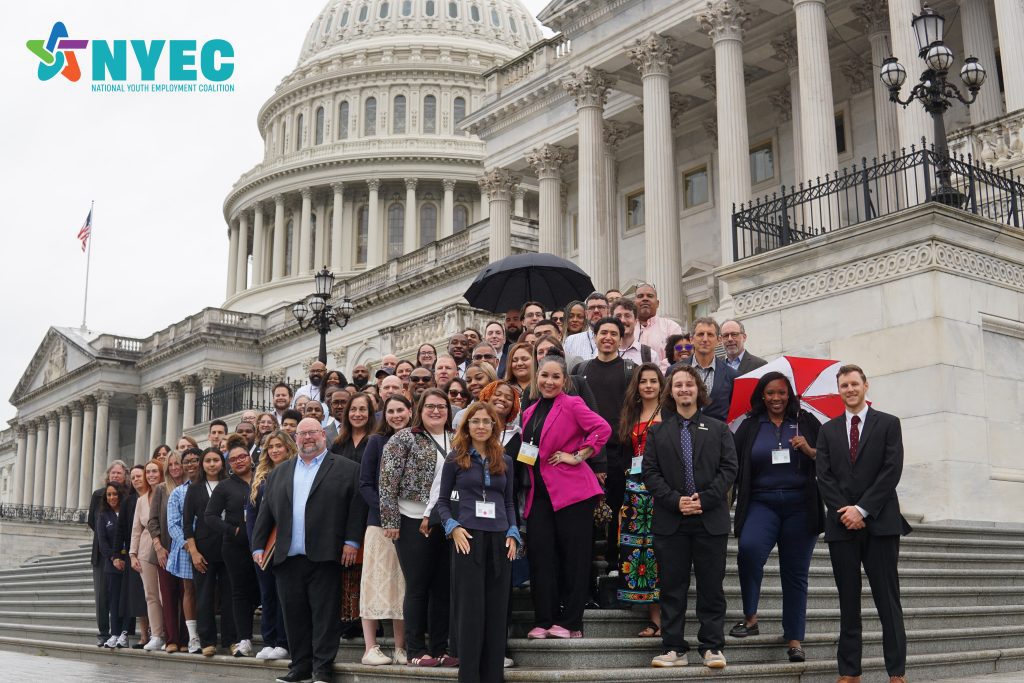
As we reflect on this year’s 2026 D.C. Summit, the National Youth Employment Coalition is overwhelmed with gratitude for the young people, practitioners, community leaders, and partners who showed up ready to share their experiences, advocate for their communities, and help shape what comes next for young people across the country.
This year’s Summit, Bridging Practice to Policy, was grounded in a simple idea: the people closest to the work should have a meaningful role in shaping the policies that affect it. Across three days of panels, workshops, conversations, and advocacy, we saw that idea come to life.
Again and again, we heard a message that challenged how we think about opportunity youth: young people are not disconnected from opportunity; too often, systems fail to connect with them. When we change the way we see the challenge, we can start changing the way we respond to it. Instead of focusing on the barriers a young person faces, we can ask how our systems can better remove those barriers and create pathways where young people feel supported, connected, and able to see what is possible.
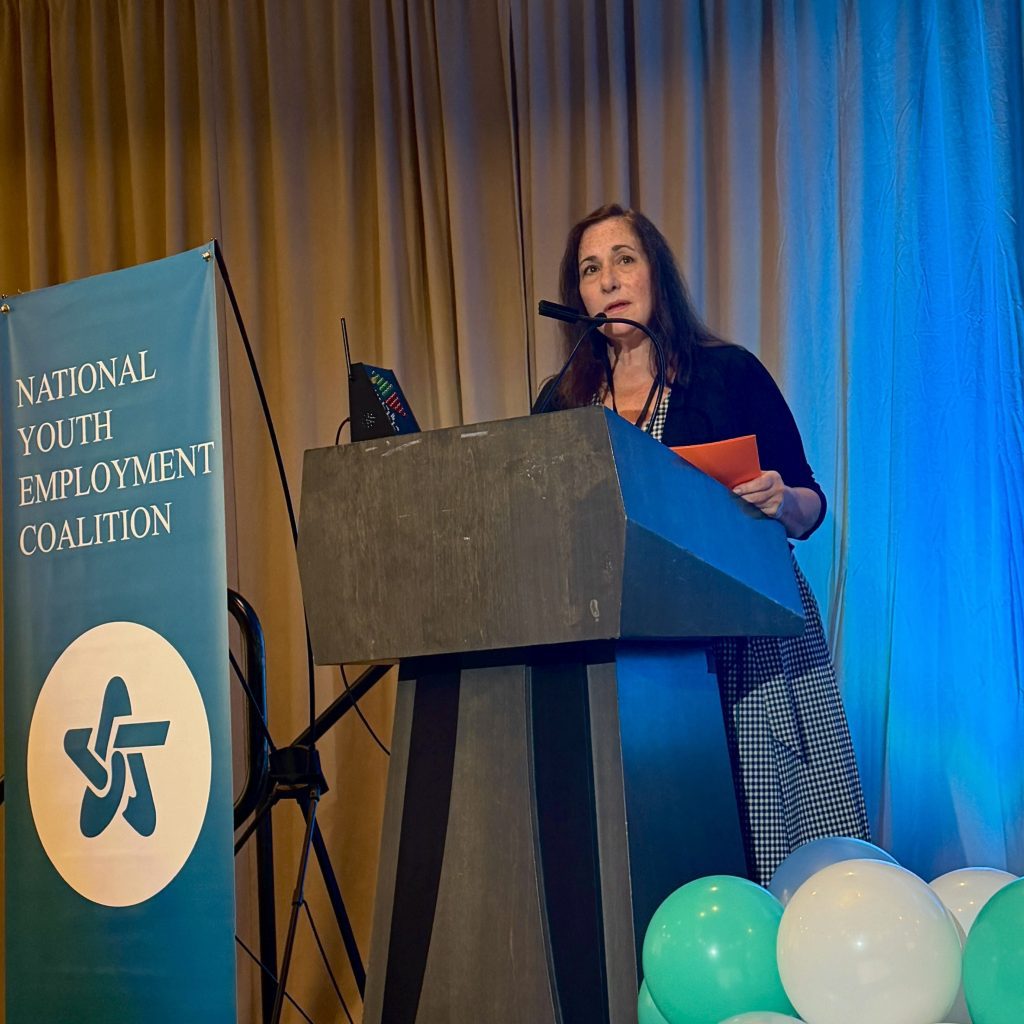
“Connecting young people to opportunity is not the responsibility of any one program, organization, or sector. It is a shared responsibility. The work we do every day is about building the relationships, pathways, and systems that allow young people to see what is possible and have the support to get there. That is why this work matters, and why bringing people together around it is so important.” (Dr. Mimi Haley, National Youth Employment Coalition)
Throughout the Summit, speakers and participants explored what it looks like to build those connections in practice. We talked about strengthening employer partnerships, expanding meaningful work-based learning, creating supportive peer and cohort experiences, building effective alumni models, and making room for young people to learn, take risks, and grow.
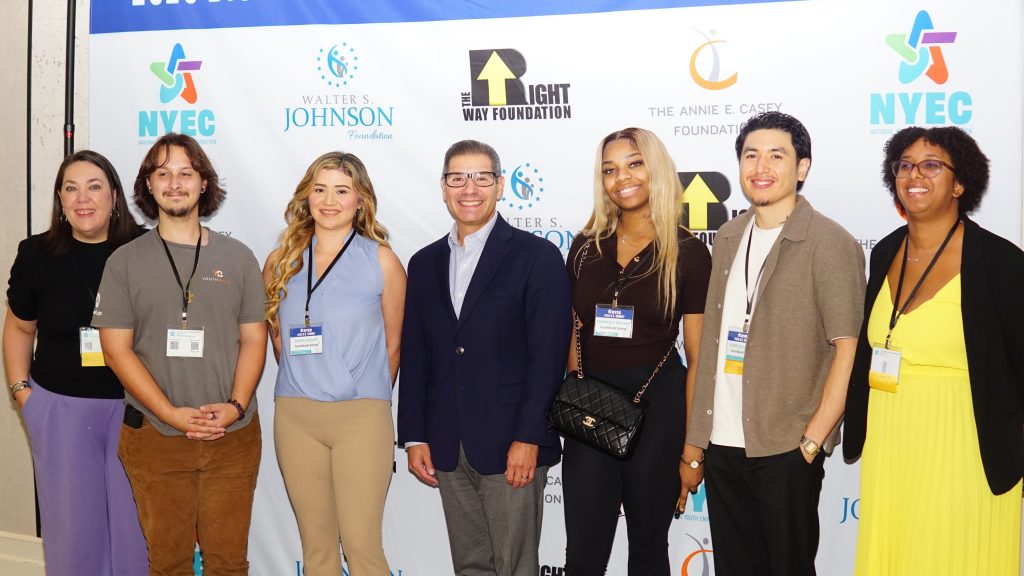
YouthBuild Global Team and Program Alumni pose for a photo.
We were reminded that, “nobody should be defined by the worst thing they’ve ever done,” (John Valverde, YouthBuild Global) and that young people inherently want to do well. We heard a call to move beyond asking, “Can you help us with this program?” and instead ask, “Let’s build it together.” (Hannah Greene, Educate Maine.)
Those ideas carried directly into Hill Day.
Together, Summit attendees participated in 74 meetings with Congressional offices, bringing the experiences of young people and the realities of youth workforce programs directly to policymakers. Participants shared what is happening in their communities, identified the challenges young people are navigating, and discussed how federal policy and investment can better support the work already happening on the ground.
And these meetings did not end when participants left Capitol Hill.
One delegation, for example, left Washington with multiple follow-up opportunities, including conversations around a Congressional cookout and exploring an earmark. Congressional offices also expressed interest in learning more about the Bipartisan Opportunity Youth Caucus (BOYC) and NYEC’s annual appropriations priorities.
These moments are a reminder that advocacy is not simply about having a meeting. It is about building relationships that create opportunities for continued dialogue, partnership, and action.
Perhaps the most meaningful part of the Summit was seeing people from across the country recognize that they have a role in shaping the conversation.
Young people brought their experiences. Practitioners brought their expertise. Community leaders brought the perspective of the places where this work happens every day. Employers, policymakers, and partners brought their own perspectives and possibilities for collaboration. Together, they helped make the case for policies and investments that reflect what young people and communities actually need.
That is what Bridging Practice to Policy means to us.
It means taking what we learn in communities and bringing it to the people making decisions in Washington. It means making space for young people to speak for themselves. It means recognizing the strengths and potential young people bring with them. And it means understanding that creating opportunity is a shared responsibility.
The work continues in the follow-up email, the next Congressional meeting, the site visit, the new partnership, the funding opportunity, and the continued conversations about how we can better support young people.
And perhaps most importantly, we heard directly from young people. They reminded us that sometimes what changes a life is simply having someone believe in you. As Jaide Rivera, Youth Co-Facilitator at Future Focused Education’s New Mexico shared, “Sometimes, you just need someone else to see something in you before you’re able to see it in yourself.” We heard about the power of second chances and the doors that can open when employers are willing to see a young person for who they are and where they are going, not just what may have happened in their past. Devontay Brown, Youth Voices Film Showcase finalist and Peckham Ambassador spoke to the importance of second-chance hiring the opportunity that comes when we make room for people to move forward alongside Nina Saloman Managing Director, Corrections and Reentry at The Council of State Governments. And across every conversation, young people made something else unmistakably clear: They belong at the table when decisions about our futures are being made. They are not simply people to build programs for or policies around. They are partners in shaping what comes next. The Summit gave us the opportunity to listen, but it also gave us a responsibility to carry those voices forward.
We are grateful to everyone who made this year’s Summit possible and to every person who took the time to show up, speak up, listen, and build alongside us. We are especially grateful to our Summit sponsors, the Annie E. Casey Foundation, the Walter S. Johnson Foundation, and the Rightway Foundation – without whom we would not be able to make this work possible.
74 meetings were just the beginning. Thank you to each of our members, board members and partners doing the work every day to connect young people to brighter futures.
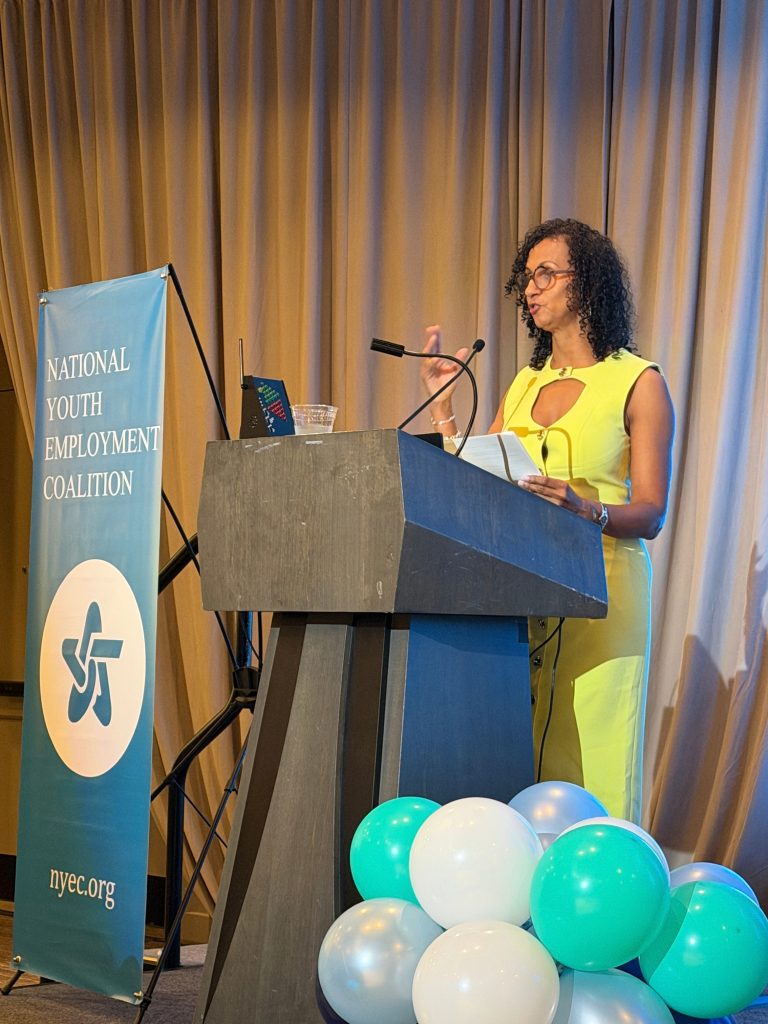
Leslie Boissiere, VicLeslie Boissiere, Vice President of External Affairs, Annie E. Casey Foundation, delivering the keynote address on the power of data to inform policy.
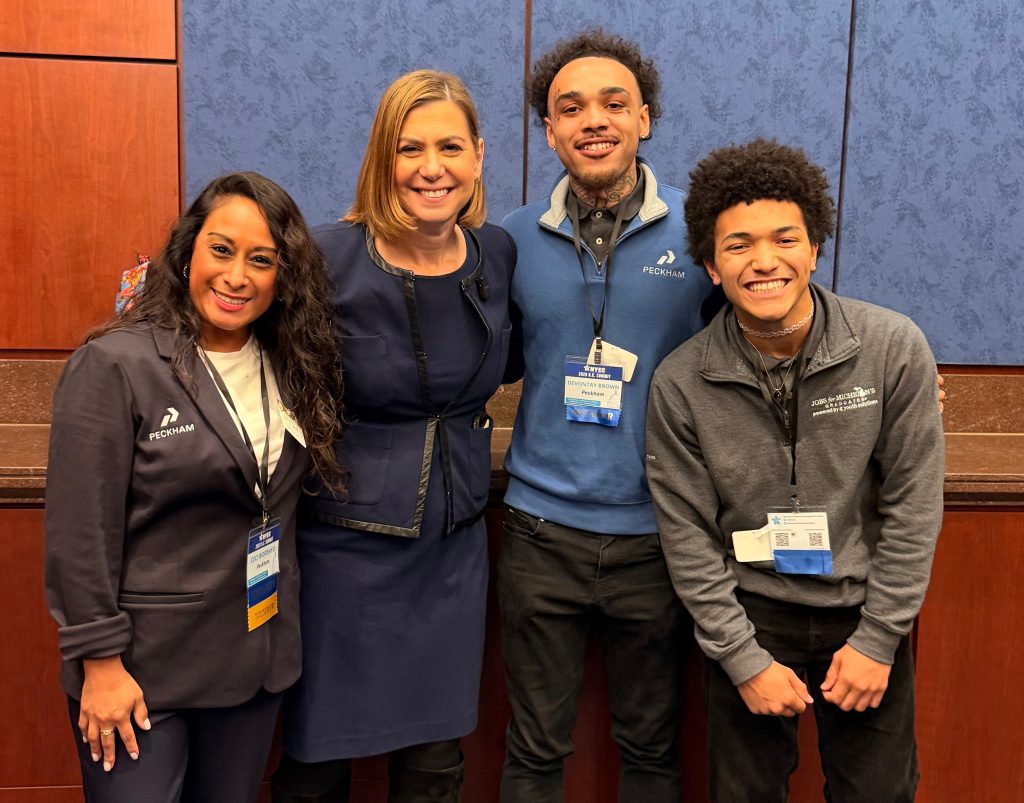
Ceci Bordayo, Youth Specialist, Peckham Inc.; Devontay Brown, Pass the Mic Ambassador; Matthew Pierre, Pass the Mic Ambassador; Team Michigan meeting with Senator Elissa Slotkin.
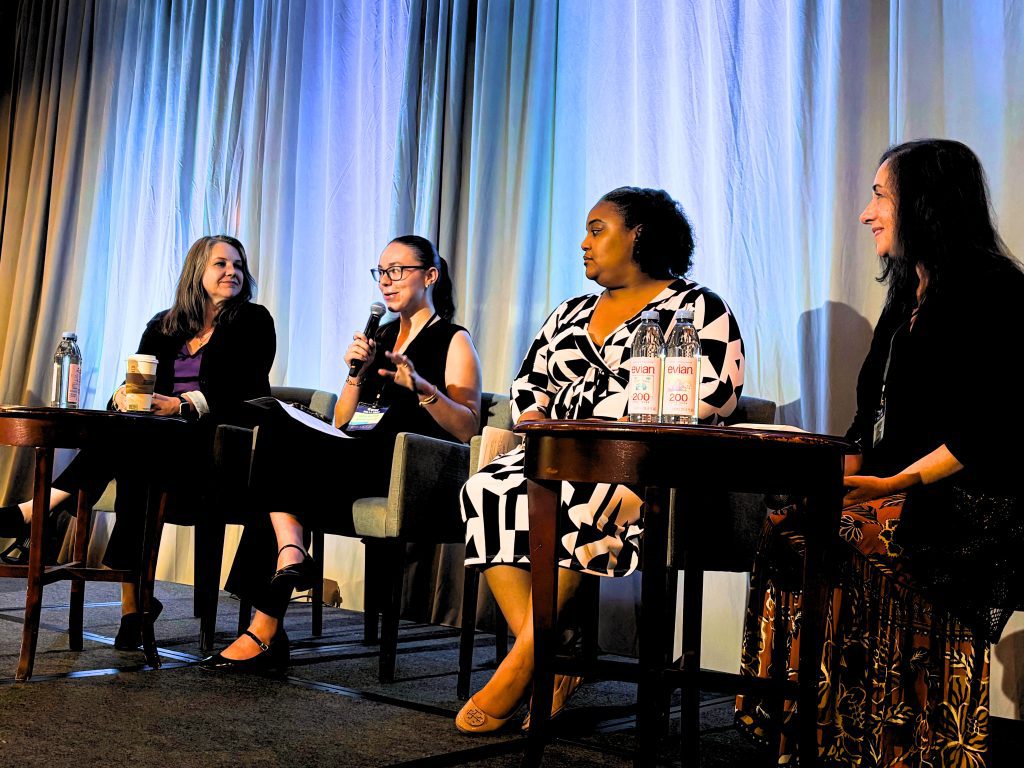
Elizabeth Henneke, Founder and Chief Executive Officer, Lone Star Justice Alliance; Jaide Rivera, Youth Co-Facilitator, Future Focused Education New Mexico; Danielle Barringer-Payton, Director, Louisiana’s Opportunity Youth Alliance (LOYAL), Invest in Louisiana; and Dr. Mimi Haley, Executive Director, National Youth Employment Coalition (NYEC).
Explore the full 2026 D.C. Summit schedule to revisit the panels, workshops, speakers, and conversations that brought Bridging Practice to Policy to life.